
Efficient and Effective Subtitling Revision:
Finding the Sweet Spot Between “Good Enough” and “Perfect”
by Rita Menezes
Subtitling revision is often invisible. Viewers rarely think about it, and yet it is precisely at this stage that subtitles become truly fit for purpose. It is also where things get complicated.
Revisers are not simply correcting errors. They are working at the intersection of language, timing, subtitler’s choices and viewer experience, constantly making decisions that shape how content is received. And all this takes place under pressure. At the heart of this process lies a persistent tension: the need to be both efficient and effective. Efficiency means working quickly, with limited time and effort. Efficacy, on the other hand, is about ensuring that subtitles fulfil their co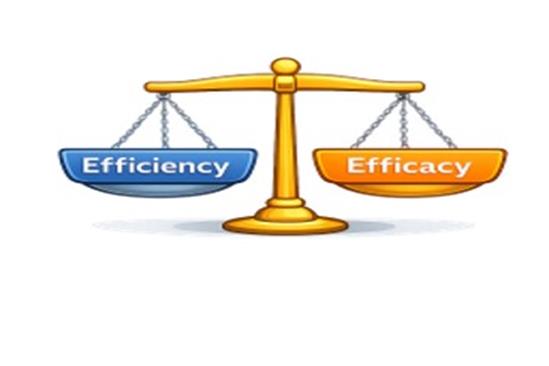 mmunicative and accessibility goals. In practice, revisers are expected to achieve both at once. This task is far from straightforward.
More than “fixing mistakes”
It is tempting to think of revision as a final polish. In subtitling, however, it is much more than that.
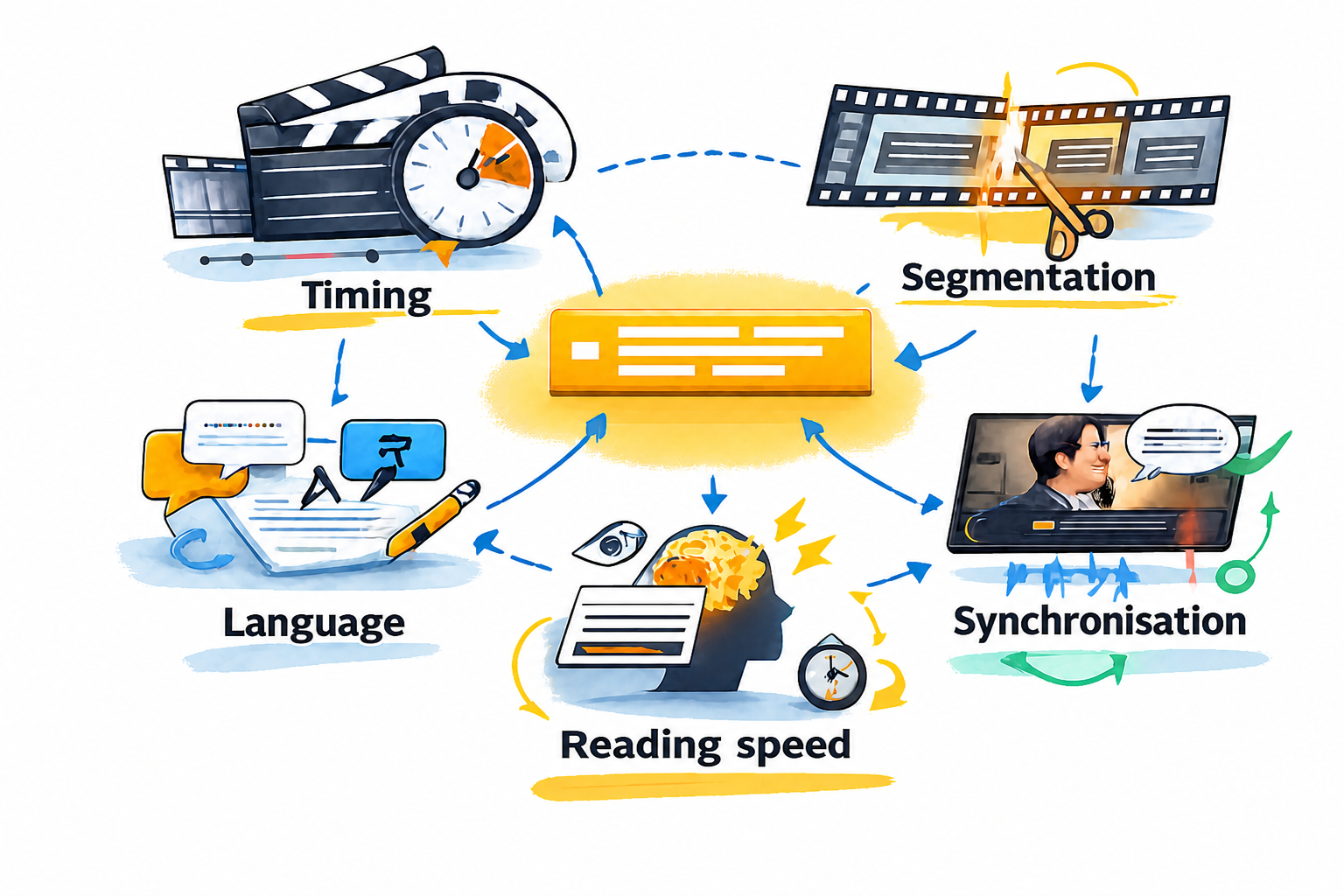
A reviser must look at subtitles from multiple angles simultaneously: the accuracy of the language, the synchronisation with speech and image, the readability on screen, and how the content is experienced by the viewer. A subtitle can be perfectly correct linguistically and still fail if it appears too late, disappears too quickly, or overwhelms the viewer. This is what makes subtitling revision distinct. It is not just textual, it is multimodal and time-bound.
Where things get difficult
In real workflows, revisers encounter recurring challenges that rarely have clear-cut solutions.
There are moments of ambiguity, where a subtitle is technically correct but does not quite convey the intended meaning. There are strict reading-speed constraints that force reductions, sometimes at the cost of nuance. Synchronisation issues can disrupt comprehension, even when the translation itself is accurate. And, underlying all of this, there is often significant production pressure. What emerges from this is not a linear process, but one that depends heavily on judgement. Revisers are constantly weighing options (see Fig. 1), asking themselves not Is this perfect? but rather Is this good enough for the viewer, given the constraints?

When revision becomes personal
If revision depends so heavily on judgement, an important question follows: do revisers always see issues in the same way? Evidence suggests they do not. Even experienced professionals may interpret the same subtitle differently, particularly when it comes to small, seemingly minor decisions. These include punctuation choices or the extent to which subtitles should reinforce or avoid redundancy with audio cues such as prosody.
Take a simple example: a line such as ‘Oh my God.’ may be revised in different ways. One reviser might change it to ‘Oh my God!’ to reinforce the emotional tone. Another may leave it unchanged, as the actor’s delivery already conveys the intended emotion and adding emphasis in the subtitle would be redundant. Neither decision is necessarily wrong but they are based on different assumptions. What this highlights is that subtitling revision is not purely technical; it is shaped by each reviser’s implicit understanding of what subtitles are meant to do and how much they should intervene.
What helps in practice
If revision is so complex, how can it be managed more efficiently?
One key principle is to prioritise impact over perfection. Not all issues affect the viewer in the same way. In practice, meaning, readability and timing should take precedence over minor stylistic refinements.
Closely related to this is the need to distinguish between correction and improvement. Correction involves fixing what is objectively wrong, whereas improvement concerns refining what is already acceptable. This distinction is essential, not only in time-constrained contexts but also to respect the subtitler’s judgement: priority should be given to correction over improvement.
A particularly effective strategy is to work in multiple passes. Rather than trying to address everything at once, revisers can move through the subtitles in stages. Take this as example: first, the subtitling reviser focuses on timing, segmentation and technical constraints; then on meaning and coherence; and finally (where justified) on stylistic refinement. This helps reduce cognitive overload and avoids tunnel vision.
At the same time, revisers benefit from being aware of their own tendencies. As discussed earlier, revision is partly shaped by individual judgement, and many professionals develop recurring habits, such as overusing punctuation or simplifying too aggressively. Recognising these patterns can lead to more consistent and balanced decisions.
Another useful technique is what might be called a “justification test”. Before making a change, the reviser can ask: Could I justify this decision to the subtitler or the client in one sentence? If the answer is unclear, the change may not be necessary. This simple check helps prevent excessive intervention and supports more transparent professional reasoning.
Finally, it is important to recognise that some of the most valuable revision work is invisible. Choosing not to intervene, after careful evaluation, is also a professional decision. If quality has been checked and alternatives considered, leaving a subtitle unchanged might be the right choice. Techniques matter, but they are not enough on their own. Professional revision also depends on restraint. Not every subtitle needs to be changed, and excessive intervention can be as problematic as insufficient revision. In this sense, revision is not about doing more, it is about doing what matters most.
Bringing research and practice closer
Subtitling revision has long been underexplored, particularly in comparison to translation itself. Yet, as both research and professional experience show, it is a crucial stage in ensuring quality and accessibility. By translating empirical insights into practical strategies (such as multi-pass revision or viewer-oriented adjustments) it becomes possible to support revisers in navigating the constraints of real workflows.
Ultimately, improving subtitling revision is not just about refining a process. It is about enhancing how audiovisual content is experienced. Subtitling revision is, in many ways, a balancing act between speed and quality, rules and judgement, technical constraints and human processing. It is precisely in that balance that good subtitles emerge.
Rita Menezes is a researcher at the School of Arts and Humanities, University of Lisbon, and a lecturer at the Polytechnic University of Leiria. She holds a PhD in Translation Studies (2024) from the University of Lisbon, with a dissertation entitled A Study of Subtitling Revision Norms. Her research focuses on subtitling quality and revision, accessibility, and training of language professionals. As a practitioner, she has over twenty years of experience as a subtitler, reviser, and quality controller, and has been collaborating with relevant industry stakeholders. She aims to contribute to the dialogue between academic research and professional subtitling practice.
